Tuesday, July 31, 2007

Repost: 'Beyond the book: page 1379 of Deathly Hallows...' from the Gypsy Scholar

I'm having much more fun read tonight than writing.

Since I usually end up writing way too much, that's a good thing.

This one is from the Gypsy Scholar who is another expat in Korea. It's about the Deathly Hallows and it pokes fun at well, you'll figure that out after you read it.

Good one Gypsy Scholar!

Beyond the book: page 1379 of Deathly Hallows...

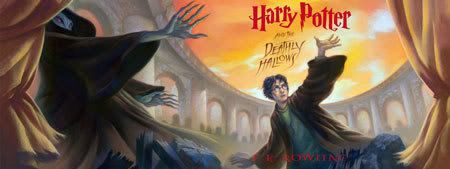
(Image from Wikipedia)

Though still a little-known fact, the latest Potter volume contains more than 759 pages.

No, I don't mean those those seven blank pages nor the "About the Author" page, another blank page, the "About the Illustrator" page, or that last visible page, on art direction and the choice of font.

Nope, not those.

I mean the part of the book that extends into another dimension, much like Doctor Who's TARDIS, which is bigger on the inside than on the outside. In those pages beyond our earthly dimensions, Rowling's Harry Potter and the Deathly Hallows never seems to end.

It is, indeed, a hypertext, unbounded in all directions and linked to every other text in the universe, a veritable universe of discourse.

I've reached page 1379, where Voldemort fully melds with the Antichrist, something I've been anticipating for several volumes now as Voldemort has taken on ever-more-serpentine qualities and thereby grown ever-more Satanic. Turns out, then, that the entire anti-Potter faction among evangelicals has been utterly wrong the whole time about Rowling's supposed 'anti-Christian' magic. In these hypertextual pages, the Christian imagery grows ever more obvious. Those evangelicals who had opposed the Potter phenomenon for its 'pagan' worldview will just have to learn to read it in much the way that they've learned to read C.S. Lewis, seeing the deeper magic beneath the witchery and accepting the pagan details as vehicles for a Christian message, as Elisabeth Gruner has been arguing for some time.

Deathly Hallows is simply another expression for the valley of the shadow of death, so we should fear no evil...

Read More...

Sphere: Related Content

Repost: 'My personal view on the current hostage crisis' from the Marmot's Hole

I've really wanted to chime in on the Korean hostage crisis in Afghanistan, but I've stayed away from it simply because it's ongoing and my views are pretty matter-of-fact and sterile. I'm really about not stirring up what is already a very emotional situation for many Koreans. Also, I've heard that those who have strong opinions like me have been taking it too far saying things like maybe they should die or that the government shouldn't try to get them out. That's silliness even if you disagree with them going there.

The talk has been so tough that people have asked Korean bloggers to just back off of the harsh talk. I think the dialogue should happen because Koreans need to do it. It's a democracy and people have a right to their opinions whether you like it or not. However, as it's not my country this is not a topic that I'm comfortable opining about until it's all settled. Here is a piece from Time.com on it: Korean Missionaries Under Fire

With that said, there is a balanced opinion on it at The Marmot's Hole. I'll just repost it here in full. I'll turn comments off 'cause if you have something to say, you should take it there, but maybe this will give some insight into the questions about why people would willingly go into a war zone.

My personal view on the current hostage crisis

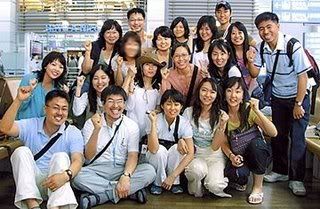
A lot has been said regarding the hostage crisis, among them the irresponsibility of the 23 that went on the so called medical mission to Afghanistan. Now why would 23 men and mostly women decide to go on a mission which most of them, despite the somewhat insane pictures taken at the airport, knew would be akin to a suicide mission?

Fortunately, I didn’t have to go far to find an answer, because based on my own personal experiences with Korean Christians, it wasn’t difficult to figure everything out.

Now I have to add that not all Korean Christians are like this, but the Korean Christians who are level headed are in the minority. Unfortunately the majority have the following tendencies;

1. The need to convert everyone around them.

This seems to be the case with almost every Korean Christian that I have gotten to know. The first question is usually “Do you go to church?” If the answer is “No”, then the sales pitch begins with lobbying on why I should believe in God and Jesus Christ, which leads to pushing me to go to church (”Are you free on Sunday? Be here by this time”) and eventually leads to comments like “why aren’t you coming to church?” or “attending the church is good for your future” or “if you attend our church then there are girls waiting in line to date you.” Some like our CIO take a more direct approach, by gathering his reports and saying “I order you to go to church with me” and in a Korean company, if your boss orders you, you don’t have much of a choice.

Personally, if I want to believe in a religion and follow its teachings, I would rather do it without people ordering/pushing me to believe in that particular religion, and what really angers me, is the Korean Christians’ penchant to ignore the wishes of the person whom they are trying to convert.

This is in contrast to American Mormon missionaries whom I had an opportunity to meet during my college years. They were eager to show me the Mormon beliefs and teachings, but at the same time, they were willing to step back and let me decide on my own. At the end, it was nice talking to them, but I decided that the Mormon church wasn’t for me, and the missionaries respected my decision.

Which brings me to this story. One of my college hubae, was an active member of a certain church with an Ancient Egyptian sounding name, and saw me talking to the Mormon missionaries. He asked me if I was planning to become a Mormon. I answered no. He sighed with relief and said that I had made a good decision. He also added that out of curiosity, he had read the Book of Mormon, and that there was a nasty odor from the hand that touched the Book, and from this he concluded that the Mormon church was not a proper church, and that it will decay.

At the same time he said that I should join his church, because his church was the true church. Yeah right.

2. The desire to be a recognized among the congregation.

Inside the church, there is a sort of pecking order. On one side are the church veterans, who have considerable influence inside the church, hold officer positions, and are well known among the congregation. On the other side are the less well-known members, who hold junior or no positions in the church. The not so well-known members aspire to be become the part of the well-know group and thus gain higher positions and influence in the church.

The reason? Some Koreans do go to church because they believe in God and Jesus Christ, but there are some Koreans who go to church as a means to an end. To them a church is a place to meet people, who might help them get lucrative contracts, jobs, plus help them out during rough times. In order to create the above mentioned network, one has to gain recognition and influence, by becoming an officer of the church.

In Korean churches, whether or not a member rises into a higher position is not judged by whether or not his or her religious beliefs and convictions are strong, but by the amount of activities that he or she has participated. This includes overseas volunteer work such as the one that the 23 were involved in Afghanistan. And from what I’ve heard from Korean churchgoers, participants of this type of work get the most points.

This means junior members feel that they have to volunteer for such work.

So now we have the two big factors that led to the 23 to embark on their fateful mission to Afghanistan. The desire to convert Muslim Afghanis to Christians, regardless of the fact that the Afghanis may not be interested in converting to Christianity, and the endless line of “volunteers” to carry out the mission.

But one may ask, why Afghanistan out of all places? Well I don’t think Afghanistan is the only country that has become practice ground for the Korean Christians. If one were to go to the Emirates and Korean Air waiting lounges at Dubai International Airport, it’s easy to notice a huge group of Korean Christians going back to Seoul, after completing their mission. And from the looks of it, they are probably transiting from countries in South West Asia and Africa. I don’t know about the other countries, but I think Afghanistan was selected because of the fact that the central government is weak, which means that the “volunteers” can go to a certain village and do their stuff without worrying about the local police. And also, because the majority of the local population is not well off. Provide them with good medical service, they get friendly with you and may be willing to listen to what you have to say. Which makes it easier to say a few words about the merits of Christianity.

Also, the fact that there was no security when the group were on their bus can be explained. They probably didn’t ask for security not because they were irresponsible, but probably because if they did, it was a matter of time before the Afghan police figured out what they were doing, which means being put on the next plane to Dubai.

As I mentioned above, the 23 members have been criticized for embarking on their foolhardy mission. But IMO, the responsibility of the entire fiasco should also rest on the shoulders of the church elders, who may have taken part in the planning and recruiting of “volunteers” for this ill-fated mission.

Read More...

Sphere: Related Content

Sunday, July 29, 2007

Politics, Sports, Business, Ethics

Here is a funny cartoon I saw in today on the commentary section of the CS Monitor's website.

Read More...

Sphere: Related Content

Friday, July 27, 2007

Another Review: Harry's Final Fantasy: Last Time's the Charm

What I really like, and have never shared is Powell's Books Review-A-Day feature.

Basically, they post one book review daily from various newspapers and magazines on their website. I have them emailed to me.

This way you get the scoop, so to speak, on new and notable books coming out.

This review is about my Dear Harry.

Unlike Kakutani and the New York Times, the Washington Post, where this review is from, seems to have taken Rowlings request so to heart that they've posted their review almost a week after the book's release. Even though I've finished, it's still interesting to read.

Enjoy!

Oh, and yes, there are spoilers...

Harry's Final Fantasy: Last Time's the Charm
A Review by Elizabeth Hand

[Ed. Note: This review contains spoilers! Well, maybe not the biggest spoilers you could think of, but if you really don't want to know anything about Harry Potter and the Deathly Hallows, then you probably want to stay away from anyone talking about it: friends, strangers, your children....Even here at Powells.com we had to ask a number of people till we found someone brave enough to prepare this review for our site!]

All great writers are wizards. Considering the mass Harrysteria of the last few days, who would have been surprised if they had logged on to YouTube at 12.01 a.m. Saturday and seen J.K. Rowling pronounce a curse -- "Mutatio libri!" -- that would magically change the final pages of her book and foil the overeager reviewers and Web spoilsports who revealed its surprise ending?

Yet Rowling's spell remains unshattered, despite the broken embargo: It's hard to imagine a better ending than the one she's written for her saga after 10 years, more than 4,000 pages and close to 400 million copies in print. Harry Potter and the Deathly Hallows may be a miracle of marketing, but it's also a miraculous book that earns out, emotionally and artistically.

Was it worth the wait? You bet.

I was a somewhat reluctant Potter convert. Rowling's debt to the great 20th-century English fantasists -- J.R.R. Tolkien, C.S. Lewis, E. Nesbit, Alan Garner -- made her work seem less homage than unabashedly derivative. Still, I read the first five books aloud to my two children, and also listened to Stephen Fry's delectable audiobooks (more than once). I found Rowling's prose style clunky (though Fry made her words sing like Shakespeare) and her storytelling workmanlike in the early books.

But Rowling's darker, more resolute vision in Prisoner of Azkaban won me over. By Book 6, my kids were teenagers, and I no longer had reading aloud as an excuse. I was hooked. So Friday night I lined up at midnight at my local bookstore, along with a hundred other readers, and scored my copy of Deathly Hallows. Sleepless, over-caffeinated and teary-eyed, I finally finished it on Saturday morning.

Tolkien continues to cast a long shadow over Harry Potter's world, along with C.S. Lewis, but the writer most evoked by Deathly Hallows is Charles Dickens. Rowling's enchantments have always lived easily in a secular world, rooted in mundane details of Muggle life and wry, careful accounts of wizards who work side-by-side, if unobserved, by their non-magical neighbors. Like Dickens, she has a gift for marvelous names -- Severus Snape is as brilliant a moniker as Magwitch or Ebenezer Scrooge -- as well as that of making the everyday seem at once familiar and extraordinary. Her magical world is grounded in small, meticulous observations -- that liminal train platform at King's Cross; the disgusting flavors of Bertie Bott's Every Flavor Beans; the wearying bureaucracy of the Ministry of Magic -- that can make her invented world seem as real as ours.

In Deathly Hallows, the thin protective veil between the Muggle and Wizarding worlds is torn away. Voldemort no longer lurks in the shadows: His forces have infiltrated the Ministry of Magic and Hogwarts School of Witchcraft and Wizardry itself, intent upon practicing their form of wizardly genocide. Half-blood wizards and Muggles are designated Undesirables, and Harry Potter is "Undesirable Number One." Muggle families like the Dursleys and the Grangers resort to a kind of Wizard Protection Program to escape being tormented by Dementors, and a mass escape from Azkaban Prison is hushed up by a corrupt Ministry of Magic, which has embraced the Orwellian slogan "Magic is Might."

Against this grim backdrop, Harry and his closest friends, Hermione and Ron, become fugitives. All three refuse to return to a Hogwarts where the murderous Severus Snape is now Headmaster, after having killed the beloved Albus Dumbledore at the end of Book 6. The aftermath of Dumbledore's death is not easily resolved. In his will, he left three enigmatic objects to Harry, Ron and Hermione, artifacts that they hope will aid them in locating the hidden Horcruxes, which contain Voldemort's divided soul, and so defeat him.

But their quest for the Horcruxes leads them into the stranger and darker territory of Dumbledore's past, and a dizzying labyrinth of betrayals and counterplots that both reverses and deepens a reader's understanding of everything that has happened in the previous volumes.

Deathly Hallows is exhilarating but also exhausting: Rowling's prose suddenly shifts into high gear, and the spectacularly complex interplay of narrative and character often reads as though an entire trilogy's worth of summing-up has been crammed into one volume. The novel's breakneck speed is reminiscent of John Buchan's fervid The 39 Steps. Harry Potter and the Deathly Hallows is a far bleaker, unapologetically adult novel than its predecessors, which now have the feel of a long, picturesque prologue, rather as The Hobbit is a prelude to The Lord of the Rings, with subplots involving goblins and warring factions who behave like orcs quarreling over the injured Frodo. But the echoes of Tolkien and Lewis are sometimes too obvious. The locket that is one of Voldemort's Horcruxes exerts a malignant power over its owners, inevitably evoking the One Ring, and the story owes too much to The Lion, the Witch and the Wardrobe.

Yet Rowling trumps even Tolkien in the sheer humanity of her characters. She nimbly and unsparingly dissects the master-slave relationship of the wizards to their elf and goblin helpmeets, and the arrogance of the sorcerers -- even ostensibly good ones -- toward their ordinary, human counterparts. And the maturation of Harry and his friends is as moving as it is realistic: Their romantic and emotional bonds are frayed and sometimes appear to be severed, but Harry and Ron and Hermione stumble on, dogged and damp and quarrelsome as real adolescents.

"The rain was pounding the tent, tears were pouring down Hermione's face, and the excitement of a few minutes before had vanished as if it had never been, a short-lived firework that had flared and died, leaving everything dark, wet and cold. The sword of Gryffindor was hidden they knew not where, and they were three teenagers in a tent whose only achievement was not, yet, to be dead."

Beloved figures die in this book. But it's part of Rowling's greatness that she permits her surviving characters to grieve, and they -- and the reader -- are the better for it. Rowling understands that grief is part of what makes us wholly human, along with the ability to love and forgive and show remorse.

And while magic is ultimately seen to have limits -- Death has its dominion, even at Hogwarts -- love does not. Rowling's major theme throughout the Harry Potter books is not the power of magic to maintain the wizards' social order, but that of love to create and sustain a community, to establish a sometimes fragile but remarkably resilient network of families, good, bad and indifferent. Parental love triumphs over even death; the love not just of biological mothers and fathers but of godparent and grandparents. There may be no broken families of divorce in the Harry Potter books, but there are blended families made up of orphaned children, Muggle and magic alike -- another trope Rowling shares with Dickens, who also understood the anguish and longing of the awkward, unlovable child shunted aside by his better-off, better-looking peers. The much-maligned loner Snape does not come onstage until the latter part of Deathly Hallows, but when he does the book becomes his: Snape's fate, more than Voldemort's, perhaps more even than Harry's, is the most heartbreaking, surprising and satisfying of all of Rowling's achievements.

I cried at the end of Harry Potter and the Deathly Hallows. It's that rare thing, an instant classic that earns its catharsis honestly, not through hype or sentiment but through the author's vision and hard work. One gets the feeling that J.K. Rowling is as relieved and joyous as we are to reach this point at last; that she's grown and suffered and struggled through the last 10 years, just like Harry. Just like us.

Read More...

Sphere: Related Content