Showing posts with label hypoglycemia. Show all posts

Thursday, May 21, 2009

Judgment

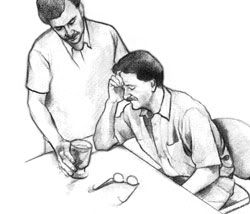
Illustration from The Diabetic Plan - When Your Blood Glucose Is Too High or Too Low webpage

How do I write this without coming off as preachy? I'm not sure, so I'm just going to write it.

I spent the day in Manhattan. I started off with an interview with a recruiting agency and then kicked around the city until it was time for a networking event in the evening. I didn't get back to Philadelphia until it was almost 11pm.

When I made it to the platform, I saw a man sitting down on the platform rather than on the benches. It was sort of odd. I initially thought that maybe he was drunk. It's common to see middle-aged or older men on the Seoul subway or trains drunk and on their way home after a night out with the folks from work. We definitely see drunk people on public transit in the States too. The train was set to arrive in a few minutes, and I noticed the man was having trouble getting up. I also noticed that the benches on the platform were full.

My first instinct was to help him. However, I had to think about it. What if he was drunk?

Good for me, my positive side kicked in because the competing thought was "what if the man is diabetic like me and just has low blood sugar?" There have been a couple of times where I've had very bad insulin reactions or hypoglycemia to the point that I was almost unconscious and people have thought I was drunk or sleepy rather than in the middle of a medical emergency.

I asked the man if he needed a hand getting up. Sure enough, he was sober and he did. He then explained that he had a really bad knee. Doctors have given him various explanations, but the bottom line is he has trouble with it. I explained that being diabetic, I've had people assume I was drunk when actually I needed help. Of course, people were looking. I made sure to say it loud enough so that the people around us to could hear. I do think the point must be made: appearances are often deceiving.

The man was really thankful that I helped him. The train approached and as we went to get on, he went out of his way to shake my hand and to thank me again.

It felt good. I learned. It was just reinforcement to think it through when I start to act on a negative assumption. I also hope the people around me learned that point too.

Okay, g'night.

Read More...

Sphere: Related Content

Thursday, November 6, 2008

diaTribe - A Great Resource for Diabetics


As regular readers of my blog know, I'm a type 1 diabetic. Type 1 means I have the type of diabetes that you treat by taking insulin. From my understanding of this version of diabetes, most people with type 1 get it when they're very young. I was luckier and didn't develop symptoms until I was in university. I say "luckier" because I do feel spared in some way that I didn't have to be a child burdened with a fear of hypoglycemia, which is also known as insulin reactions or low blood sugar. Even though the various forms of the disease are generally known that doesn't mean that people are necessarily well-informed. There are even some diabetics who ought to take a more active role in managing their disease. In fact, active management is key to being healthy.

I started insulin pump therapy a few years ago and, I admit with a fair amount of shame, that I've still yet to master it. It takes a lot of time and recording keeping. This is a bit ironic as in my 20s I was a model patient.

I'm glad I found diaTribe and, so far, it's pretty informative. Here is what they have to say about what they do:

Diabetes is a large and complicated field - from multinational pharmaceutical companies to sprawling clinics, from prestigious academic centers to remote research labs. It is filled with exciting breakthroughs and heartbreaking disappointments, but ultimately it's about patients like you and me who want to live long, healthy lives.

That's why we started diaTribe. Our mission is to leverage our knowledge and experience to give our readers the information they need to to live the life they want.

Each year, our team travels all over the world to gather the latest information on diabetes; we have access to Americas leading diabetes researchers and clinicians, we attend all the conferences and we've developed unmatched expertise in the business of this disease.

Unlike other newsletters, diaTribe is not just straight reporting, and it is not for everyone. As the name suggests, we have an opinion. We might rant, we might rave, we might lament or celebrate, but we will always inform and enlighten. We hope to reach that tribe of readers who are smart about diabetes, who believe in intensive management, and who are eager to learn more for themselves, perhaps, or a loved one.

In every issue of diaTribe, we bring you focused information, including:

  1. Conference Pearls - what we consider the biggest news from major and-under-the-radar-screen conferences that we attend;
  2. Logbook, a look at the human drama of diabetes by best-selling author James S. Hirsch;
  3. Learning Curve, a closer look at the science behind the news;
  4. What We're Reading, our column that highlights the top 5 percent of our monthly reading on diabetes (we review 25 magazines and journals per issue) ;
  5. diaTribe dialogue, excerpts of our conversations with key clinicians that we converse with regularly, who share with us lessons from their offices and labs;
  6. Test Drive, our personal, no-holds-barred experience with new drugs and devices.

We do all the homework, so you don't have to.

What I like is the end because I've got a lot of homework to do and I'm glad to have a bit of help sorting through all the information.

So far they have published 12 issues. You can download the .pdf files at their website. I've also put them here. It's moreso for me because I can get them easily this way, but I can share them with the Internet at large too ;)

If you have diabetes or know someone who does, take some time to check out the site.

Issue 1
products_subscription_diatribe-1
Get your own at Scribd or explore others:


Issue 2
products_subscription_diatribe-2
Get your own at Scribd or explore others:


Issue 3
products_subscription_diatribe-3
Get your own at Scribd or explore others:


Issue 4
products_subscription_diatribe-4
Get your own at Scribd or explore others:


Issue 5
products_subscription_diatribe-5
Get your own at Scribd or explore others:


Issue 6
products_subscription_diatribe-6
Get your own at Scribd or explore others:


Issue 7
products_subscription_diatribe-7
Get your own at Scribd or explore others:


Issue 8
products_subscription_diatribe-8
Get your own at Scribd or explore others:


Issue 9
products_subscription_diatribe-9
Get your own at Scribd or explore others:


Issue 10
products_subscription_diatribe-10
Get your own at Scribd or explore others:


Issue 11
products_subscription_diatribe-11
Get your own at Scribd or explore others:


Issue 12
products_subscription_diatribe-12
Get your own at Scribd or explore others:

Read More...

Sphere: Related Content

Thursday, September 25, 2008

Homemade Yogurt and Sugar-free Rambling

Last night I made a batch of homemade yogurt.

Why do I bother when you can get yogurt in Korea? Well, I'm an insulin dependent diabetic and what you can't get in Korea is sugar-free yogurt. You can get plain unsweetened yogurt, but the types of yogurt I miss are the fruit flavored yogurts with a sugar substitute.

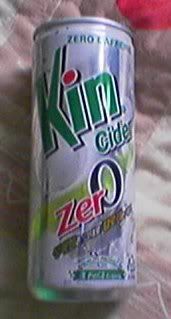
Forget getting anything like that here in a land where my favorite new sugar free lemon-lime soft drink, the Kin Cider Zero, just simply disappeared off the shelf of my regular grocery store. Maybe it will be back in stock one day, but usually what happens is I fall in love with a product but the Korean population doesn't, so buh bye. Honestly, you'd think with the obsession on being rail thin that sugar-free products would be hard to keep on the shelves. It truly beats me why no companies have sought to tap into the thin paranoia that exists here.

Anyway, the reality is my homemade yogurt is probably much healthier for me than a mass produced brand. So with my stash of XyloSweet, xylitol, that I bought while I was at home, some kiwi that I bought, cut up and froze before I left for L.A., milk and plain yogurt (as a starter), I woke up to a few cups of fresh yogurt and that makes me happy.

Read More...

Sphere: Related Content

Saturday, April 19, 2008

A Balancing Act - A Good Explaination of Type 1 Diabetes


Today started off well because the weather was great and I got out to exercise. However, my enthusiasm led me to push myself too hard. And I ended up with hypoglycemia, low blood sugar, in the middle of my day. When it's a bad one like today's I'm usually zapped for the rest of the day. Hence why I'm sitting here typing rather than doing something else like going out tonight.

Instead, I decided to search about diabetes, fatigue and insulin reactions. I've not found anything particularly interesting on that, but I did find a well written web page for people who have Type 1 diabetic children in their care. It's on the Juvenile Diabetes Research Foundation Canada's website. It explains how the disease works in awesome detail. I'd say it's not just for people looking after kids. It's for anyone who wants a clear, but fairly short explanation of what Type 1 diabetics have to deal with and how to help them when needed.

A Child With Type 1 Diabetes Is In Your Care

Facts You'll Need to Know

This information is for people who may from time to time be responsible for a child with type 1 diabetes. It is designed to provide basic information about type 1 (insulin-dependent or juvenile) diabetes so that you can feel comfortable with the child.

Whether you are a teacher, a camp counselor, a baby sitter, or a relative, you should realize that:

* Children with type 1 diabetes have the same needs for guidance, support, and understanding as other children.
* Type 1 diabetes is not contagious.

Type 1 Diabetes Defined

Type 1 diabetes is a chronic disease. In the child with type 1 diabetes (juvenile diabetes), the pancreas does not produce insulin, a hormone necessary to sustain life. Without insulin the sugar in the blood can't be used. It builds up in the bloodstream even while the body is starved for energy. A person with type 1 diabetes must take one or more injections of insulin daily to stay alive.

Insulin, however, is not a cure. It is only a means of controlling the disease.

How Type 1 Diabetes Is Controlled

Type 1 diabetes control means keeping the level of sugar (glucose) in the blood as close to normal as possible. The three variables of type 1 diabetes control are: food, exercise, and insulin. Self monitoring of blood glucose is the tool for tracking and maintaining the balance among these variables.

The rule of thumb is: food makes the glucose level rise; exercise and insulin make the glucose level fall. Type 1 diabetes control is a constant balancing act of food, exercise, and insulin. Blood glucose monitoring is the tool for maintaining this balance. If the balance is thrown off, either of two type 1 diabetic emergencies might occur: hypoglycemia (low blood sugar, an insulin reaction, or insulin shock) or hyperglycemia (high blood sugar).

Low Blood Sugar (Hypoglycemia)

The emergency situation you are most likely to encounter in caring for a child with type 1 diabetes is low blood sugar, also known as an insulin reaction or insulin shock. Low blood sugar may be caused by eating too little food or not eating soon enough after a previous meal, by too much physical activity without eating, or by too much insulin. Symptoms listed below appear suddenly.

Each child has a particular set of personal symptoms that you will come to recognize.

* Headache
* Sweating
* Shakiness
* Pale, moist skin
* Cold and clammy
* Extreme hunger
* Weakness/Dizziness
* Fatigue/tiredness
* Rapid pulse rate
* Blurred vision
* Shallow breathing
* Inability to concentrate
* Loss of coordination
* Mental confusion
* Seizure
* Loss of consciousness

Treatment

If the child is awake and can swallow, provide sugar immediately. Give 1/2 cup of fruit juice, non-diet soda, or two to four glucose tablets. The child should be feeling better within 10 minutes. The child should then eat some additional food, such as half a peanut butter, meat, or cheese sandwich. The child can then resume normal activities. If the child does not respond immediately or does not improve in 10 to 15 minutes, treat the reaction again. Make sure the reaction has been taken care of before the child is left alone or allowed to go home.

If the child has lost consciousness or is having a seizure, administer glucagon and call your doctor. If you do not know how to give glucagon or do have it available, call 911. Do not give anything by mouth if the child is unconscious or having a seizure.

High Blood Sugar (Hyperglycemia)

Blood sugar levels can increase rapidly in children. It is suggested by the following symptoms of hyperglycemia:

* Increased thirst
* Weakness or fatigue
* Blurred vision
* Frequent urination
* Loss of appetite

Hyperglycemia can be caused by too much food, too little physical activity, not enough insulin, or illness or infection. High blood sugars can be confirmed by testing with a glucose meter. If hyperglycemia occurs, the parent or guardian should be notified.

Ketoacidosis

Ketoacidosis is a diabetic emergency. In most, but not all cases, very high blood sugar levels are also present with ketoacidosis. Signs of ketoacidosis may include:

* Dehydration
* Labored breathing
* Vomiting
* Abdominal pain
* Fruity-smelling breath
* Weakness or fatigue

Diabetic ketoacidosis requires prompt attention; untreated, a child with ketoacidosis can lapse into a coma. If there are signs of ketoacidosis, the child should be taken to the emergency room.

Daily Routine of A Child with Type 1 Diabetes

Consistency is the key—regular meals, regular exercise, regular insulin. In addition, the child will need to test his or her blood sugar level at various times of the day to determine food or insulin needs.

Diet
Children with type 1 diabetes can eat the same healthy foods as other children. The lunchroom manager should be aware of the child's diet restrictions, but usually the child is taught to select the right foods.

Frequent Snacks
A child with type 1 diabetes may require snacks at mid-morning, mid-afternoon, and bedtime. These and regular meals must occur on time so insulin usage is properly balanced and low blood sugar does not occur.

Exercise
Children with type 1 diabetes can participate in all kinds of active sports. However, since exercise burns up a lot of sugar, the child should have an extra snack of juice or crackers before planned strenuous exercise to avoid low blood sugar. Exercise should not be scheduled just before a meal.

Self-Monitoring of Blood Glucose
Several times a day, before meals and before bedtime, a child with type 1 diabetes may need to test his or her blood sugar. Usually this process involves pricking the finger, putting a drop of blood on a chemically sensitive strip, and taking a blood sugar reading on a meter. Older children usually are able to do this themselves; younger children may need help. The parents will give you instructions.

How You Can Help the Child with Type 1 Diabetes in Your Care

* Treat the child normally. The child with type 1 diabetes will be able to function as a normal participant in group activities. While the fact that he or she has diabetes should not be hidden, the child does not want to be singled out for special treatment. A quiet understanding should exist between you and the child about the necessary precautions to be taken.
* Allow the child to follow his or her routine inconspicuously. When the child needs extra snacks, to test blood sugar, or to take insulin, help by allowing the necessary time and not calling attention to these special actions.
* Be alert to the changes that signal low blood sugar.

If behavior problems arise as a result of an insulin reaction, you should not blame the child. Quick action on your part can prevent a medical emergency.

General Tips

* Watch the child's behavior before meals and snacks.
* Make sure meals are eaten on schedule.
* Don't assign physical exercise just before a meal when the child may be in need of food.
* Arrange an inconspicuous means of taking the mid-morning and/or afternoon snacks.
* Keep a source of sugar readily available, and encourage the child to carry some form of sugar.
* Make sure all necessary personnel are informed.
* Most children need a snack at night before bed.
I can't stress how important it is, even for an adult diabetic, to be treated with understanding. Saying silly stuff like "I'd never be able to give myself a shot" is really irritating to hear. If it's between death and a shot, you take the bloody shot. I really hate having to point that out to people silly enough to say that to me.

Ooops. It looks like the side effects of low blood sugar for me tonight is some major crankiness.

Anyway, I hope you learned something about Type 1 diabetes if you didn't already know how the disease works.

Read More...

Sphere: Related Content

Friday, April 18, 2008

Diabetics and Health-nuts Rejoice!!!


I've sat on this for a couple of weeks, so who knows if this stuff is even in production anymore.

I was out a couple of Friday's ago and there were some people set up to give freebies away. I could tell it was a selection of fruit juices and since I'm an insulin dependent diabetic I didn't bother with it.

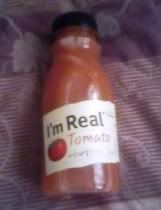
However, the folks promoting it told me these juices by 풀무원, Pulmoune, were fresh squeezed, completely natural and had no added sugar. There were a range of flavors, but I grabbed the tomato one because other fruits have a higher sugar content.

Now in Korea juices are usually from concentrate and if they're not, you either squeezed it yourself or you paid way too much at a department store market. In fact, fresh juices are so rare that one Korean gentleman I was talking to said it was "liquid fruit." I told him that in California fresh juices are common and I'm glad to see they're here. Hopefully, sales will take off because the bottles are ridiculously small. A range of sizes would be nice.

The problem is in Korea a product can disappear just as quickly as it showed up. I hope they market this well. I'd like to be able to buy bunches and bunches of the stuff.

Hint, hint y'all - market to diabetics, market to health conscious people and market to parents.

So, yeah, sugar free lemon lime soda and now fresh juices with no added sugar!!!

Korean websites are horribly laid out for direct links, so I can just give you directions on how to get to the page. Go to the website (linked above) and do this in IE, click on 제품&브랜드 (the third choice at the top) and then 제품정보. From there you'll be at the correct menu. Then go down to 얼음/음료 and finally click on 음료. The product info is there.

Read More...

Sphere: Related Content

Wednesday, July 18, 2007

Kin Cider Zero, Finally

As my readers know, I'm an insulin dependent diabetic (type 1). I go out of my way to specify "insulin dependent" because you just don't know how irritating it is to discuss it and then have someone say "my ______________________ (fill in the blank: mom, dad, uncle, aunt, grandmother, grandfather, etc.) is diabetic."

Okay, yeah, they're diabetic, non-insulin dependent (type 2), but it's a different version of the disease. There are tons of similarities but my version is not because I was not eating healthy and not exercising. It's because early in my life my pancreas simply stopped working.

In Korea there are people with both type 1 and type 2 diabetes, but they're not very vocal about how it impacts their lives or about what products would make their lives a bit easier. In fact, oftentimes they'll go out of their way to not reveal it. That's one big reason I was left face first on the desk during class last term. People thought I was just sleepy or even drunk but not ill. I think that relates back to the fact that being different or having something "wrong" with you is bad here, so people don't discuss it. My nurse asked me if I told people that I was diabetic. I said of course I did. She explained that another patient of hers is a student who doesn't tell people. In fact, because of this, his university made sure that his roommate was also diabetic so they could take care of each other.

What that means is there aren't many sugar-free or diabetic products here. There are basic things like insulin, test strips, insulin pump supplies (although not a broad selection of pumps) and needles, but I've never seen glucose tablets for insulin reactions (hypoglycemia) here. And that's the main reason I've gained about two dress sizes since I've been here. Thank goodness for Harley Pasternak (he has diabetic brothers) - I'm working on it. Basically, I'd rather have higher than average blood sugar than aim for tight control, pass out and have people around me be just clueless. I've managed to get supplies by picking them up when I leave the country, having a friend do it or now I have a mail forwading service who just sends me what I need.

Anyway, I've found sugar-free drinks through certain sources here. But I was in E-mart yesterday and needed to get juice to carry with me in case of an insulin reaction and saw this:
I've always argued that sugar-free products could be introduced here and peddled as diet aids since Koreans are so uncomfortable with making acceptance of disease a priority. In general, Korean women are obsessive about their appearance, which is great for the men here, but that means there is a huge market for products like this. Well, with the release of Coke Zero it seems the Coca-Cola folks have followed up with Kin Cider Zero ("cider" in Korea means it's lemon-lime, like Sprite). Now this is great because the only sugar-free drink here was Coke Light (Diet Coke) which has been replaced by Coke Zero. It still won't replace my special "vendors". They've literally been life savers providing sugar-free drink mixes, sweetners and drinks.

However, it's great to see that we have another addition, and for the benefit of slim Korean women and, more importantly, us diabetics, I hope to see more.

Read More...

Sphere: Related Content

Thursday, June 28, 2007

If You're Diabetic Don't Take Amtrak

Update: July 30, 2007 @ 8:56am

They found him! (video from KNBC.com). Thank God he's okay.

----------------

Okay, this piece of news enrages me: Diabetic Man Kicked Off LA-Bound Train, Now Missing.

Video covering the story from KNBC.com in Los Angeles: http://video.knbc.com/player/?id=124695

Amtrak abadoned a diabetic man at a railroad crossing. To make it worse Roosevelt Sims is 65 and this railroad crossing was in the middle of nowhere.

I don't swear much when I'm writing my blogs but what the fuck!!!!?

What kind of stupid people work for Amtrak that they're unaware that some people have special needs and those needs are often not obvious. Like the doctor says in the video there is no way to know. However, shouldn't Amtrak train their staff to ASK DETAILED QUESTIONS?

Now, I don't take the train in the States and I definitely won't now that I've heard this. When I fly I almost always order a diabetic meal and, even if I don't order a special meal, I tell my flight attendant that I'm diabetic (they always check if you've ordered a meal.) But I don't think they have catered meals on Amtrak trains. The time I took the Orient Express from Vienna to Paris we got a meal in the morning but I boarded the train in the evening in Vienna after stopping at Subway to get a sandwich. The experience is the same on the high speed Eurostar and Thalys trains. You just get up and go get something when you're hungry. On Amtrak you just get food from whatever is there too, right? I dunno...really, just asking here.

There is no way to know a person is a diabetic just like there is no way to know a person has high blood pressure or heart disease. You can't see it, but if any of these diseases or conditions act up people need to stop and think. It also helps if the person is wearing a Medic Alert braclet or pendant (I just ordered a new one a few weeks ago.) However, you still have to think to look for the bracelet.

If you've hung around my blog a bit you know I'm an insulin dependent diabetic. I wear an insulin pump and there is always a risk that at times my blood sugar will drop. In fact, it happened last night, but I felt it coming on and got a cup of apple juice.
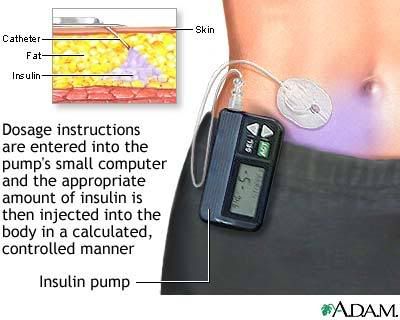
It happens because with my type of diabetes, type 1 (insulin dependent) your body doesn't make insulin or, for type 2's, your body is having trouble producing insulin. Diabetics have to try to keep our blood sugar levels in a very tight normal range. If it goes too low you have hypoglycemia or low blood sugar:

Hypoglycemia, also called low blood sugar, occurs when your blood glucose (blood sugar) level drops too low to provide enough energy for your body's activities.
This article also goes on to describe some symptoms:
Symptoms

Symptoms of hypoglycemia include

* hunger
* nervousness and shakiness
* perspiration
* dizziness or light-headedness
* sleepiness
* confusion
* difficulty speaking
* feeling anxious or weak

Hypoglycemia can also happen while you are sleeping. You might

* cry out or have nightmares
* find that your pajamas or sheets are damp from perspiration
* feel tired, irritable, or confused when you wake up
This list isn't exhaustive. Also, it doesn't hit upon on thing that is very common. A diabetic who is having an insulin reaction might appear to be drunk or intoxicated.A diabetic who is that deep into a reaction probably isn't coherent and even if you ask "are you okay?" you're probably not going to get an answer that describes the situation. Basically, if your friend is diabetic and they're acting strange get something sweet for them like orange juice and ask questions AFTER they've gotten their blood sugar back up. Also, the list of symptoms doesn't touch upon hypogylcemia unawareness which is a condition where the diabetic can't even sense their glucose level is dropping. Stress also contributes to being less likely to pick up on your blood sugar dropping low.

Actually, this happened to me this term. It was my last term, I was working and I was a stressed out mess. One evening I was in class. I'd had a brownie I'd bought a bake sale for our department and had taken extra insulin to cover it. Well, I took too much insulin, so at the end of class I got really drowsy and I had other symptoms. I always carry sugar tablets and juice with me. However, I've noticed when I'm stressed I'll mistake those low blood sugar symptoms for stress. Then I'll get more and more confused and eventually someone has to figure it out for me.

Well, it happens that this past term I had two classes back to back. I just put my head down on the desk and clearly looked like I was sleeping when the next class started. The people around me most of whom know I'm diabetic because I don't hide it for the very reason should something go wrong I want them to remember I'm sick. This also includes my professor because I also told him I was diabetic. No one initially figured it out. I actually had some classmates say they thought I was just sleeping or that I might have been drinking (offensive as why would I start boozing it up in class when I'd never done it before...stupid, stupid, stupid.)

It took me being passed out face first on the desk for over an hour for a classmate to figure out I needed help. She's from Jamaica and I do think the culture where taking charge is good caused her to step up when she saw that questions from the professor were going unanswered. She got me a soda and a snack and slowly my glucose level got back to normal. However, I still have no recollection of what happened during that couple of hours except for selected bits. I also had experience with it early this past semester because I was taking too much insulin and my activity level spiked which left me with too much insulin and nothing digest I was passing out or coming close more often than not.

Anyway, at least in Korea for all the whining foreigners do about rude Koreans, the people helped me out in all but one of those emergencies were Korean where verbal communication was limited. Having people around you be helpful and aware is crucial when you are unaware of what's happening and can't help yourself. It also brings home that it's necessary to pay attention and not just go on superficial assessments.

I hope they find Mr. Sims is alive and well. Last I heard they'd traced phone calls from his phone somewhere in Arizona. When they do find him I hope that Amtrak and its employees get an ass-whipping for just being plain stupid.

If you're going to cater to the general public then be ready to deal with the needs of the general public. It would have been much easier for the fools at Amtrak to give the man a glass of orange juice than to toss him off the train.

More links:

American Diabetes Association: Hypoglycemia
Diabetes Health: Amtrak Abandons Diabetic Man at Lonely Railroad Crossing
KTAR News: Police: Diabetic Man Missing After Being Kicked Off Train

Addendum:

What's interesting is I didn't mention race but Mr. Sims is a black man (that's clear if you want the news clips.) I can't help but wonder if they would have put Mr. Smith out in the middle of a national park. I wonder.

Read More...

Sphere: Related Content

Saturday, March 10, 2007

Still Sick, So It's Game Time

"Sick, I am" by Pyro Panda from the Bahanimation - Bahamian Animation Site

I'm still feeling like crap although I can tell I'm getting better. It's just been a scary week, healthwise, because I had two serious insulin reactions where I went unconscious.

Yes, I talked to my doctor. We figure it must be the drugs the school nurse gave me. I think they knocked me out, so that I was too out of it to notice that my blood sugar was going low. Usually, I notice and hypogylcemic unawareness is a serious complication with diabetics.

Anyway, today is Saturday and I've eschewed all drugs and instead I'm sticking with lots of fluid including a Korean cold medicine drink called 쌍화탕, ssang hwa tang. It has:
  1. Peony Root----------------1%
  2. Steamed Rehmannia Root---2%
  3. Astragalus Root------------1%
  4. Korean Angelica------------2%
I have no idea what any of that is, but I do know it doesn't have drugs that make me so out of it that I loose touch with how I'm feeling. Plus, it's worked for me before when I didn't want to use over the counter medication for a cold. Three warm bottles a day and you do feel better. Between those I'm drinking a lot of Celestial Seasonings or green teas and having chicken soup. Plus, it's Saturday and I made sure I had a nice long nap.

I'm going to avoid that nurse from now on. She almost killed me.

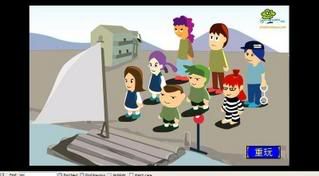
Anyway, in my "I feel like crap" websurfing I found a game that's been on the net for a couple of years at least. It's called the River IQ Game. It's annoying but just think through it logically, step by step and you'll get it.

The page is in Japanese, so here are the rules:
Objective:
Get everybody across the river.

Rules:
* Only 2 persons on the raft at a time

* The father can not stay with any of the daughters without their mother’s presence

* The mother can not stay with any of the sons without their father’s presence

* The thief (striped shirt) can not stay with any family member if the Policeman is not there

* Only the Father, the Mother and the Policeman know how to operate the raft

To start click on the big blue circle on the right.
To move the people click on them.
To move the raft click on the pole on the opposite side of the river.
Here is the link: River IQ Game

After I solved it the first time, I decided to play it again just to make sure it wasn't a fluke:


It can be done. Have fun!

Read More...

Sphere: Related Content